Business License
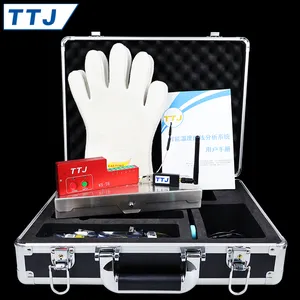
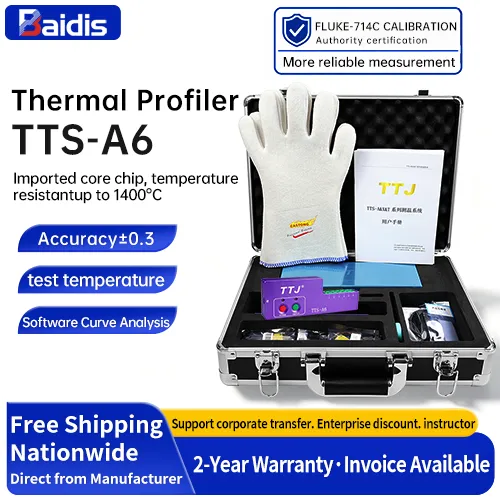
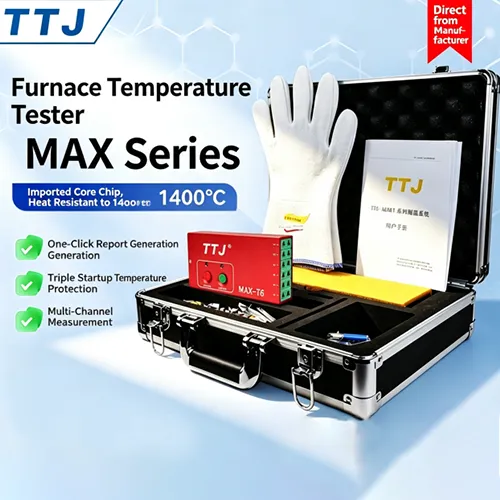
Your TTJ thermal profiler can be flexibly deployed across workshops and compatible with most high‑te
Applicable Industries
Lithium‑battery processing, die‑casting metal heat treatment, plastic encapsulation, glass processing, auto parts, brake pad manufacturing, food drying, bearing quenching processing.
Compatible Oven Types
Quenching furnace, tempering furnace, tunnel heat‑treatment furnace, vacuum oven, battery hot‑press curing furnace, assembly‑line drying furnace, high‑temperature sintering furnace, constant‑temperature oven.
Complete Operating Procedures
Select a thermal‑insulation box of suitable specification according to the maximum temperature of the furnace chamber. The thickened thermal‑insulation housing is preferred for high‑temperature heat‑treatment working conditions.
Arrange thermocouples in accordance with process requirements. Distribute probes on large‑size metal workpieces to detect temperature differences between upper and lower sections, inlet and outlet inside the furnace chamber.
Verify that all probe connectors are securely locked to prevent poor contact caused by vibration.
Power on and adjust parameters. High‑temperature quenching furnaces feature fast heating rate; set the sampling frequency to 0.1 s to accurately capture instantaneous peak values.
Place the temperature‑measuring device inside the tooling fixture, then feed it into the furnace together with workpieces.
Retrieve the main unit upon test completion. Allow the instrument to cool down before connecting to the computer, so as to avoid high‑temperature damage to the unit’s ports.
Export the complete heating‑soaking‑cooling curve via software. Verify soak duration and peak temperature, and optimize heating parameters of the heat‑treatment furnace.
Set‑up dedicated process archives for different workshops. Separate and archive data of SMT, paint baking and heat‑treatment processes. Instrument channels support freely‑customized naming. Simply modify parameters when switching workshops, and the unit is ready for operation.
The instrument delivers outstanding compatibility. One single unit fits various furnaces across the whole plant, eliminating the need to purchase separate temperature‑measuring equipment for each workshop. It adopts universal consumables and offers straightforward after‑sales support. For comprehensive factories with multiple production lines, substantial procurement costs of temperature‑profiling instruments can be saved.
Recently Posted
-
Precise and stable control, zero data deviation, TTJ crushes the market's ordinary furnace temperatu
August 22, 2026In various precision industrial manufacturing processes such as SMT surface mount reflow soldering, metal hardware heat treatment, Read More
 -
Leverage the TTJ Oven Temperature Profiler to Safeguard Your Production Profit Bottom Line with Prec
August 18, 2026For manufacturing factories, the biggest loss is never equipment procurement costs, but invisible process waste, silent batch defe Read More
 -
A Reliable Oven Temperature Profiler Is the Core Guarantee for Mass Production Yield
August 18, 2026Having worked in SMT placement process debugging and quality control for ten years, I have deeply understood one truth: the vast m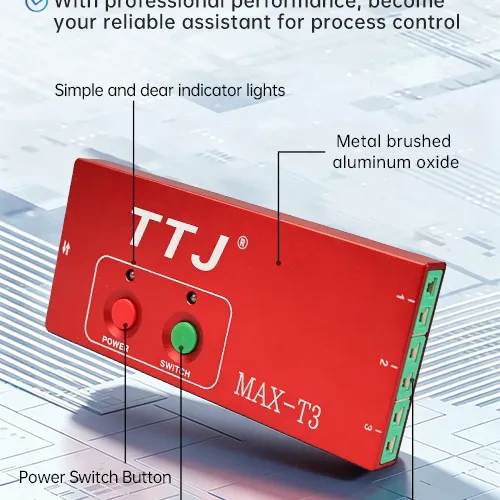 Read More
 -
TTJ Oven Temperature Profilers: The Preferred Domestic Alternative for Industrial Thermal Process Me
August 18, 2026In industrial thermal process production scenarios such as SMT placement processing, hardware spraying, automotive parts heat trea Read More

Contact Us
Recommended Products
-
 TTJ Thermal Profiler, High Temperature Resistant, Professional Temperature Tracker for SMT Reflow Oven & Wave SolderingNegotiableMOQ: 1 Combo
 -
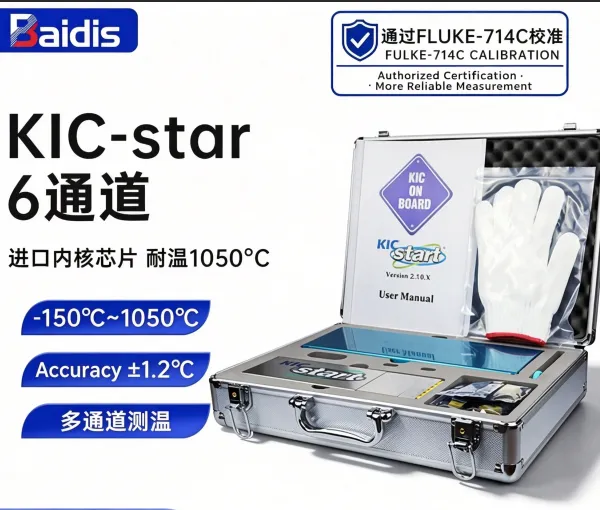
KIC START 6CH Thermal Profiler for SMT Reflow, Wave Solder & Coating Tunnel FurnaceNegotiableMOQ: 1 Combo
-
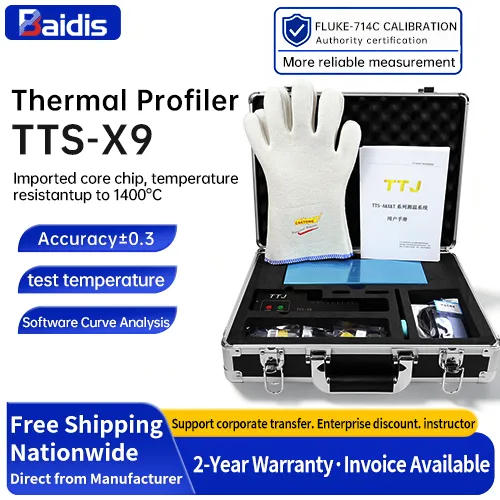
TTJ Thermal Profiler, High Temperature Resistant, Professional Temperature Tracker for SMT Reflow Oven & Wave SolderingTTS-X9NegotiableMOQ: 1 Combo
-
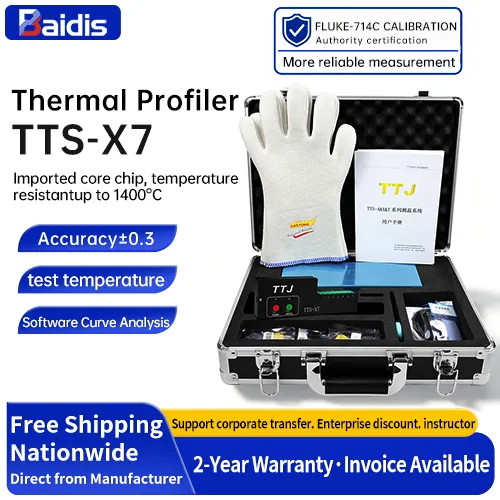
TTJ Thermal Profiler, High Temperature Resistant, Professional Temperature Tracker for SMT Reflow Oven & Wave SolderingTTS-X7NegotiableMOQ: 1 Combo
-
TTJ Thermal Profiler, High Temperature Resistant, Professional Temperature Tracker for SMT Reflow Oven & Wave SolderingNegotiableMOQ: 1 Piece


-
TTJ Thermal Profiler, High Temperature Resistant, Professional Temperature Tracker for SMT Reflow Oven & Wave SolderingNegotiableMOQ: 1 Combo
-
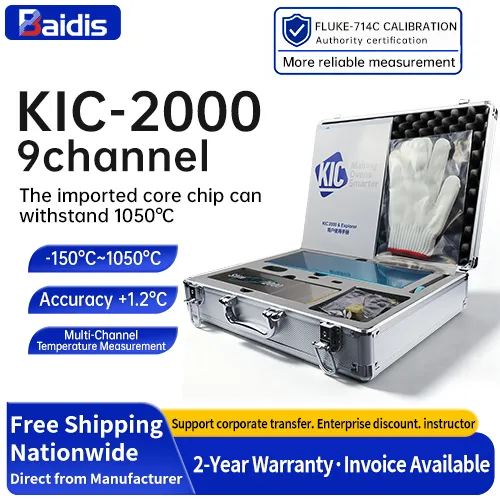
KIC 2000 9CH Thermal Profiler for SMT Reflow, Wave Solder & Coating Tunnel FurnaceNegotiableMOQ: 1 Combo
-
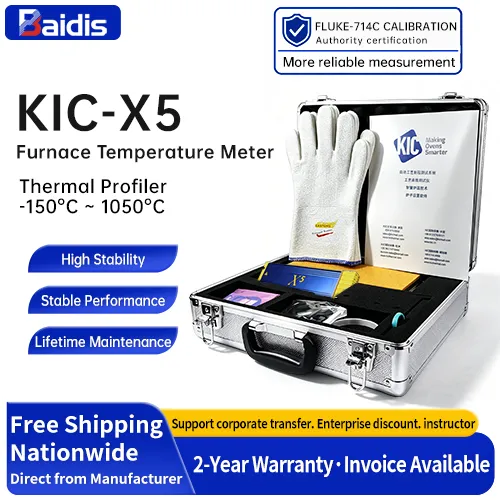
KIC X5 7CH Thermal Profiler for SMT Reflow, Wave Solder & Coating Tunnel FurnaceNegotiableMOQ: 1 Combo
-
TTJ Thermal Profiler, High Temperature Resistant, Professional Temperature Tracker for SMT Reflow Oven & Wave SolderingNegotiableMOQ: 1 Combo